

Laminates and Industrial Thermosets (AKA: Phenolics)
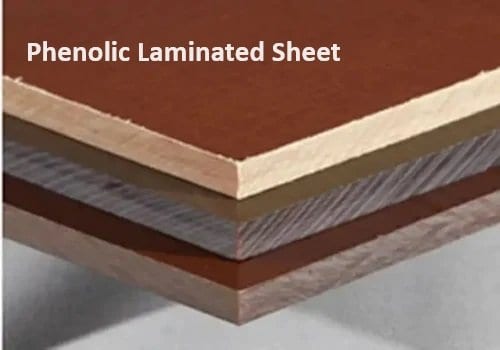
High Pressure Phenolic Laminates and Industrial Thermosets are a category of synthetic thermoset plastic materials, originally invented by Dr. Leo Baekeland in 1907 and first known as Bakelite. These materials are typically composed of layers of base materials like paper, cotton cloth, or glass fabric impregnated with resin binders such as phenolic or epoxy, offering high temperature resistance and varying mechanical and electrical strengths. Common grades include Paper Base (X, XX, XXX, XP), Canvas Base (C, CE), Linen Base (L, LE), and G-10/FR4, which are widely used in applications like electrical components and mechanical parts.
Thermosets (Paper, Canvas, Linen), Epoxy, G-10, FR-4, FR-5 , GPO, Melamine, Silicone and more

These materials were originally invented by Dr. Leo Baekeland in 1907. First called Bakelite, it is claimed to be the first synthetic thermoset plastic material. Several other base and resin materials are also available; Polyester, Melamine, Nylon and more.
This high temperature resistant material has been used in numerous applications for over 100 years. Other laminate trade names: Phenolic, Micarta®, Phenolfab®, Phenolkraft®, Ryertex®, Garolite®, Spauldite® and Texolite®.
Please call with additional questions or specification assistance, or contact us here.
These properties are for evaluation purposes only. This information is not to be construed as a warranty, guarantee or assurance that you may achieve the same results. Materials made from different resin types, manufacturing techniques and manufacturers will react differently. The information should be used to compare against other materials only, and each user should make his own tests to determine suitability. No warranty as to this materials suitability are either expressed nor implied.