

PTFE is an incredibly popular type of plastic material, with widespread use and many different applications. Though its popularity has waned–and its applications changed along with how this particular material is developed–PTFE is still an excellent choice of material for industrial equipment and electronic parts.
What is PTFE?
PTFE is well-known for its non-stick properties and also known for being incredibly easy to machine and fabricate, and thus has been used extensively in industrial and electrical applications, especially for bearings, seals, valves, and fittings.
The Properties of PTFE
PTFE and the family of Fluoropolymers have many excellent physical properties that are not just for high temperature and chemical applications, but many others as well.
The basic properties of PTFE include: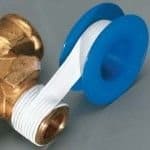
- Slippery and Non-stick surface regardless of rod or sheet form
- Excellent Wear and Superior Chemical Resistance
- Continuous Operating Temperatures up to 500oF
- ITAR and RoHS compliance
At Industrial Plastic Supply, we also stock and supply a massive range of PTFE in many different sizes and shapes, including extruded rod, molded rod, thin sheet, thin and thick plate, and film. We can also mold PTFE tubing according to specific customer specifications.
The Applications of PTFE
PTFE has seen wide use in a variety of parts and equipment, especially in industrial applications, electronics, aircraft systems, chemical processing equipment, and hydraulics. Typically, this type of material is used in the making of seals, gaskets, stem valves, wear and slide-machined parts, various fixtures, manifolds and pump components, and high temperature steam seals. It’s most often the choice of material for caustic fluid handling valves and fittings.
Key advantages of PTFE:
- Very high temperature resistance
- Exceptional Chemical Resistance
- Very low surface tension
- PTFE is ITAR and RoHS compliant
- Excellent for gaskets and seals
Virgin PTFE material is used frequently as a bearing or non-stick surface. It is an excellent choice for caustic fluid handling valves and fitting. Massive size range in extruded rod, molded rod, tubular bar and thin sheet, plate and film. PTFE is also known as: Fluon®, Diakin®, Flouroplastic®, Fluoropolymer®, Neoflon®, Polyfon®, Chemfluor®, and more. PTFE plate, sheets, rods, strip, slab, block and tubes are normal stock items.
Other Fluorocarbon Based Materials We Supply in Sheet, Plate and Round Rod: FEP – Fluorinated Ethylene Propylene; PVDF – Poly Vinylidene Difluoride (Kynar®, Tecaflon®, Sustatec® and more); ETFE – Polyethylenetetrafluoroethylene (Tefzel®); ECTFE – Ethylene Chlorotrifluoroethylene; PFA – Perfluoroalkoxy; PCTFE – Polychlorotrifluoroethylene (formerly KEL-F® or Neoflon®). Compare to other high performance plastics, like: Ultem® 1000, PVDF (Kynar®) or Ultem® 2300.
