New Performance Plastic May Be Making Metals Obsolete
Metals have been around for a very long time, drastically longer than Performance Plastic materials.
The history of Performance Plastic materials is the opposite of the history of metals. Metals are thought to have begun with the use of copper about 11,000 years ago. Gold, silver, iron, lead, and even some brass began to be used before the first known appearance of bronze in the 5th millennium BCE.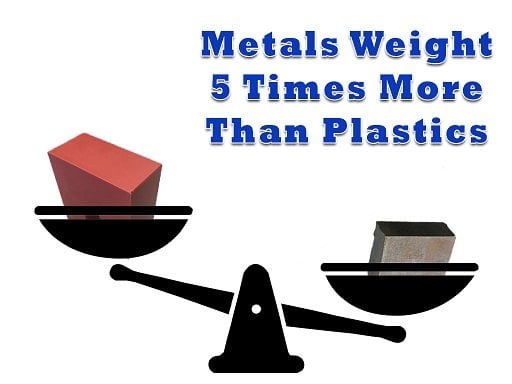
Artifacts made of smelted iron have been found dating from about 3000 BC in Egypt and Mesopotamia. In those times, iron was a ceremonial metal; it was far too expensive to be used in everyday life. Metals are commonly very stiff, tough and strong. However, they are also generally quite heavy. Also, the cost to heat metal to production temperatures is extremely high, over 5 times that of Performance Plastic materials. When metals corrode they get smaller, and many can decompose to yield rust.
Performance Plastics
In comparison, plastics only were first made in the early 1900’s. The world’s first known fully synthetic plastic was Bakelite (now days considered Phenolic), and was invented in New York in 1907 by Leo Baekeland who coined the term ‘plastics’. Since this date, thousands of chemists and material scientists have synthesized dozens of plastic base materials. Plastic materials are currently available in over 80 types, and each of these are molded or processed at slightly different temperatures. The wide range of performance plastic materials will allow you to choose the perfect material for your next application.
Some of The Advantages of New Performance Plastic Materials
New Higher Temperature Performance Plastics Material
New Performance Plastic materials like Victrex 450g PEEK and Sabic Ultem 1000 have much higher use temperatures over previous performance plastic materials. The Ultem 1000 unfilled has a continual use temperature above 400 degrees F, while the newer Victrex 450g PEEK materials work well at 480 degrees F on a continuous basis. In addition to the higher temperatures, they are still food grade materials.
Most performance plastic materials can typically be molded in a temperature range of 400 to 600 degree F. While steel starts to melt at 2,500 degrees F. This is five times the temperature, meaning it takes 5 times the energy to convert steel instead of plastic. Lower temperatures equates to lower costs of production.
New Lower Weight Performance Plastics Materials
The average plastic weighs just 20% of the average metal product. Many plastics have exceptional weight to strength ratios, meaning that for the weight of the product they are very strong. This low weight means much less raw materials and less impact on the environment if using plastics over metals. This results in lower cost to manufacture parts from plastics over metal.
For instance, new UV grades of HDPE or High Density Polyethylene are very light, with a density of just .96, so light it floats in water. And yet, this new UV grade of HDPE is a workhorse in the plastic market, and is used to replace wood and metals in outdoor furniture.
New Detectable Performance Plastic Materials For Food Contact Approved
Most Performance Plastic materials were engineered to be food contact compliant, and in most cases FDA approved for food contact. With the increase in food recalls, finding the proper materials to ensure that our foods are safe is imperative. Materials like Acetal Copolymer, Acetal Homopolymer, Nylon, Ultem 1000 and Victrex 450g PEEK are all FDA approved for direct food contact.
Which Performance Plastic Will Work The Best
Here are some new performance plastic material grades that include additives to make these materials detectable during food processing. These newly released detectable products include: Tecaform AH UD (copolymer acetal base), Tecapeek UD Blue (PEEK based) and Hydex 4101 UD Blue PBT – Polyester base). Each of these new performance plastic materials comes in Blue color to be detected by color sensors during food processing. The “UD” portion allows these materials to be detected by X-Ray and Metal Detection scanners in food processing production lines. Using these new detectable performance plastic materials in food processing plants can help to eliminate food contamination issues and massive food recalls.
Recent Rising Costs Of Transportation
Changes in transportation rules and regulations since 2018 have made shipping raw materials significantly more expensive. Weight, size restrictions and surcharges for longer packages have more than doubled in the last year.
This has made one of the most expensive components of materials reaching the marketplace is transportation costs, and over the last several years the costs of moving materials across the country has skyrocketed. Metals are heavy, and this weight makes many items very expensive to transport.
Each step in the production of a finished good generally involves shipping to the next step. Raw material converted into base material, then base material converted into usable shape. Later this shape is turned into a component or part. Each time there is a conversion, there normally is shipping to the next processor. Metal weight can limit the amount of metal that can be moved at one time, where plastics can ship up to five times more product per truckload.
With performance plastics, often the conversion in small factories that can be located near final assembly of components limits the amount of shipping of plastic parts. Also, due to the light weight of plastics, trucks can hold up to five times the amount of plastic over metals for shipping. Many plastic parts are made very close to where they will be consumed, cutting logistics fees. This five times the weight also translates to five times higher cost to ship metals. This reduction of transportation costs moves more profit to the bottom line.
New Performance Plastic Materials Eliminate Need For Lubrication
Often, on large metal parts or assemblies, grease ports are added to make lubricating the metal parts easy. Metal on metal parts will wear out very quickly, and therefore require regular service and lubrication.
Newly released performance plastic materials have made lubrication obsolete. One such material is a new compounded Nylon material, called Nylatech PVM has FDA approved oil additives. This new Cast Nylon material runs well for extended periods without external lubrication. This material runs quieter and smoother than previously used metal parts due to a much lower coefficient of friction, and requires no regular maintenance.
Another new grade of Performance Plastic material that is rated as ‘self-lubricating’, and have excellent wear resistance is Lub-X UHMW, which now makes curves in bottling plants move smoother, quieter and require no lubrication. These long wearing and high strength materials outperform most other substrate for low cost, high performance, low weight and self lubrication.
Each of these plastic advantages yield cost savings and long product life. Along with these new areas of advantage, Performance Plastics are 100% recyclable, and can be reprocessed into high strength parts again and again. The plastic recycling industry is still in its infancy, and as it becomes more adept at recycling and reusing valuable plastic materials, our planet and our pocket books will benefit.