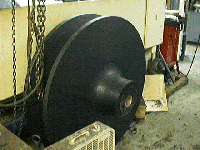
Nylon Tube and Tubing can be made from Nylon 6 or 6/6
Nylon is one of the most popular and widely used plastic materials. From the carpet in your home to the yellow Nylon rope you have in your garage, Nylon is a tough and very wear resistant material. This self lubricating mechanical plastic material is very stiff and extremely durable. This material can be machined easily, and is a key industrial plastic resin.
Nylon 6 and Nylon 6/6 Tubing
While Nylon is a common plastic material, in the extrusion and cast grades, it is not a normal stock item for many factories. Nylon can be produced in a huge range of sizes. The cast process enables the range of sizes of a Cast Nylon Tube (Type 6) to be almost unlimited. The extrusion process is a bit more restrictive, which can produce very small sizes to larger sizes of Extruded Nylon Type 6/6 Tubing up to about 2.0″ OD. The properties of these materials are similar, and are listed here. Also, in the case of the Cast Type 6 Nylon Tube, many additives can be mixed into the casting mixture to increase many critical properties. Examples of these additives can yield: Glass Filled Nylon Tube, FDA Approved Oil Filled Cast Nylon Tubing, Cast Nylon MD Tube (molybdenum disulfide), Solid Lubricant Filled Cast Nylon Tube, and a few additional variations. These same filled items are also available in Cast Nylon Rod, Cast Nylon Sheets and Cast Nylon Plates (all made from the same Cast Nylon Type 6 resin). This casting process allows for a wide range of sizes and configurations, from round rod, cast sheet, tubular bar to near net shapes and covers on metal rollers and gears.
Why use Tubular Nylon (Nylon Tubular Bar)
There are numerous reasons to use a Nylon Tubular shaped material.1. Vast range of sizes to fit most requirements2. Large reduction of waste due to near net shape3. Great reduction of machining time due to matching size to finished needs4. Lower cost due to reduced material and reduced machining time
The difference between Nylon 6 Tubing and Nylon 6/6 Tube
The main differences are the base resin. The Nylon 6 tubing is a cast resin, and the Nylon 6/6 tube is an extrusion grade resin. Both materials are still Nylon, just a different grade of resin. The properties are also very similar, look here for specific Nylon resin properties. The other difference is that the Cast Type 6 Nylon is normally in larger sizes. This is because the cast version is poured as a liquid into molds or rigid tooling, and is done one at a time. This process, while it makes a very high quality part, is a more expensive manufacturing method, and is not cost effective in small or thin cross sections.The extrusion grade of Nylon, the Type 6/6 Nylon is heat processed in large batches. This process requires set up and large runs, and is very cost effective in these large production runs. In addition, the cross sections for the heat processed Nylon 6/6 can not be excessively large. The extruded Nylon 6/6 is therefor done sizes up to about 3″, as larger pieces are more expensive and require extra stress relieving to prevent warping.
Cast Nylon Versatility
The Cast Nylon manufacturing in the USA is very advanced. The production facilities can produce amazing and diverse sizes and shapes in the grades listed above. One of the unique versions of Cast Nylon is in the Glass Filled Nylon Tube, Glass Filled Nylon Rod and Glass Filled Nylon Sheet range. The percentage of glass fill can be custom blended to meet your specific needs, and can also contain additional fillers like MD, Oil or pigments. Many grades of Nylon are also available for very specific applications, like: bearings, sheaves, pulleys, wear plates, food processing applications, FDA approved grades, color matched for identification and many more. Other plastic materials used in these same applications include: Acetal Copolymer, PET (Polyester), PTFE and more.Contact us today for additional information on this or any other plastic sheet, rod or tube material. E-mail us here, or call us toll free at 866-832-9315, or visit our main web page at: iPlasticSupply.com
Gehr Plastics has been a major global manufacturer in the plastic sheet and rod industry since 1932. During this period, Gehr has become a leader in a variety of product lines, and also become known for very large sizes in both sheet and rod. Currently Gehr can produce Acetal rod up to 20″ in diameter and sheets up to 8″ thick. Some of the many plastic materials the Gehr produces:
Radel Rod is produced in many medical grade colors
Being innovative also means looking forward. Gehr was selected as the Bioplastics manufacturer of the year in 2008, partly for the new line of plastic materials which have a bio base. These materials have a variety of bio based forms, including: a PLA base, Cellulose based, Polyamide and Wood – Plastic Composite (WPC). One such material is ECOGEHR PLA-L which is a blend of polylactic (polylactic acid), some lignine, fatty acid and wax. This biopolymer is new to our industry and can be used in temperatures ranging from -22 °F to +140 °F.This complete line of materials is one of the only available in the plastic industry to be comprised of many renewable raw materials. Gehr leads the way in this exceptional and innovative product line.
ClearGehr Polyamide Rod
This brand new product is a Clear Polyamide rod. The outside surface is as extruded, and can be polished. This enables the production of a relatively clear sight glass quality material with most of the high end properties of Polyamide – Nylon material. We have supplied this material for small machined parts where neither Polycarbonate nor Acrylic would work well. Because of the natural inherit chemical resistance of Polyamide, this high end ClearGehr rod can out perform all normal transparent plastics. Give us a call to see if this new innovative product will work in your difficult application.
FDA Approved Wear Grade Acetal
Have you been looking for an extended wear Acetal material (like the PTFE filled Acetals – Delrin AF), but need it to be FDA approved? Then perhaps you should consider WearGehr. This proprietary filled Acetal material has excellent wear resistance, and retains the FDA approval of the base Acetal, unlike the PTFE filled Acetal materials which are not FDA approved. It is made in a blue color for easy identification, also it remains very machinable. Contact us for more information on this excellent high tech material.Call us at 866-832-9315 or send us a note here.
A frequent question is ‘Where are you located’, and we are happy to share our address.While we service the entire United States, our shipping warehouse is regional.
We are in Anaheim, California, and have been since 1975. Here is our street address:
Industrial Plastic Supply, Inc.
2240 Dupont Dr.
Anaheim, CA 92806
866-832-9315 or 714-978-3520
Our Fax number is: 714-978-2812
Thinking Nationally, Serving Locally
Providing local industrial clients high quality materials for over 37 years, we find that having a warehouse full of materials is a benefit to you, our client. The inventory is here, and we welcome you to come by for a visit. We service the entire USA on a daily basis, however, we still are a local company and can service your local needs today. You requested more stock of the items you need, and we have done our best to have the most popular materials in stock, with more on the way.
When selecting our location, we considered many factors, including: freeway access, central location, easy to find, etc. We picked Anaheim because it is in the center of Orange County. We are centrally located between Los Angeles County, Riverside County, San Bernardino and San Diego Counties. We have clients pick up here from Ventura County and even Santa Barbara Counties! We really are easy to find, right across the street from the ‘Big A’ – Anaheim Stadium where the Los Angeles Angels of Anaheim play ball.
Next time you are traveling in Orange County, we invite you to stop by and see the huge inventory of industrial, mechanical and engineering plastic sheet, plastic rod and tube we have here for you.
The world is an ever changing and frequently hostile environment. Damage can be caused by a range of factors: from storms, floods, tornado to fires, hurricanes and earthquakes – all natural disasters.
This is certainly evident in the recent earthquakes and tsunami that ravaged Japan and Haiti. In addition, we have man made disasters. The nuclear concerns in Japan have captivated people’s attention throughout the globe. The Gulf Oil Spill is an example of another environmental disaster. Plastic materials are the perfect choice in prevention, preparedness and clean up from natural disasters.
Plastics in disaster preparedness.
Many plastic materials are used in the prevention, control and repair management – whenever and wherever a natural disaster may occur.
One of the most visible plastics is the Polycarbonate used in hurricane window covers / shutters. Polycarbonate is a clear rigid plastic that has extremely high impact strength, and is the material most commonly known as ‘Bullet Resistant Glazing’. It is used in safety glasses, riot shields and bank theft prevention glazing. The Polycarbonate protects windows and inhabitants from flying debris and breaking glass caused by the high winds, hurricanes or tornado. Use of the Polycarbonate window coverings saves homes from damage, and helps reduce insurance premiums.
Hillsides are affected by storms and heavy rains, causing mud slides. The standard and most popular solution is to cover hillsides with Polyethylene film. This helps to prevent the rains from saturating the ground and causing the ground to move or shift. The Poly film is normally .004” – .010” thick in widths up to 20 feet and lengths of 100 feet (the same material used as painters tarps from home improvement centers). This film is then attached to the hill with spikes, stakes or sand bags; and this material sheds the water rather than letting it soak in. It can be applied with folds and used like rain gutters to direct water flow away from specific areas. Also, the current sand bags used are not the old cotton fabric bags used years ago; they are now a high strength and tear resistant woven polypropylene ‘fabric’ bag.
The recent critical issues with nuclear leaks bring up an interesting use of a plastic material. As you may recall, after the earthquake and tsunami, the Japanese energy experts were pumping water and boron into the reactors to help control the amount of nuclear energy released.
The nuclear industry uses a plastic material, High Density Polyethylene (HDPE) that has been filled with the natural mineral boron. This boron filled (typically a 5% boron fill) is used to shield neutrons and nuclear energy in many applications; nuclear submarines, nuclear power plants, hospital radiation, dental x-ray shielding and industrial radiation applications. It is normally produced in sheet, and can then be mounted in and around the radiation source as shielding. The benefit to using this boron filled HDPE is this sheet weighs significantly less than traditional lead shielding, and is therefore much easier to install.
Plastic used in clean up from disasters
It is much more difficult to clean up after natural disasters occur. Many of the methods used in the preparation limit the amount of clean up caused by natural disasters.
Depending on the severity of the natural disaster, the uses of plastics in the aftermath are almost limitless. In the cleanup and rebuild after major Earthquakes, shelter is a key component. One of the quick shelters brought in are simple wooden frames with twin-wall plastic sheets made from either Polypropylene or Polycarbonate stapled or nailed to the framework. This provides an inexpensive, easily movable and effective shelter for short term housing. The twin-wall design provides excellent insulation and energy savings. This style shelter is foldable, easy to transport and very easy to set up. Several versions can be made from small huts to larger family areas, to separate sanitary latrine units. These extruded twin-wall materials work well to protect against rain and excessive exposure to the elements. These can be used as assembled, or with a sand bag reinforced perimeter. In Haiti, there were reports of residents filling used one gallon water bottles with mud, and building shelters with these mud building blocks.
The gulf oil spill brought plastics to the front line in disaster cleanup again. Materials used to collect and dispose of excess oil from the waters were rushed to the area. Polyethylene bags are used to collect the oil covered and saturated cleaning rags and clothes, preventing additional dispersion. Many varieties of machinery were brought in to clean the waters. One style machine uses 8” UHMW rod as a squeegee roller that grabs the oil from the water surface and then collects it for later use. Oil booms and rotary wheels are common systems for collecting oil from spills. Because plastics have great surface tension, the oil ‘sticks’ to the plastic surface during the cleaning process. Then the plastic surfaces are wiped clean for reuse and capturing the oil. Plastic tubes and hoses are used to move the oil after collection.
A significant use of plastics would be in the aftermath of natural disasters, specifically in the sanitation and clean water areas. First is sanitation; plastics are used in keeping items clean and dry. Polyethylene film covers items such as medical supplies, shelters, clothing and food cartons. This film keeps the items protected during shipment and ready for use.
Water is the second area of concern. Clean water is critical during the clean up and resettling after a natural disaster. Individual use water bottles are the quick and easy way to deliver water. Larger rotationally molded tanks are brought in with the ability to store large amounts of water in the areas affected. Reverse osmosis equipment (many components are made from plastic) is brought in to convert contaminated water in the clean potable water on site.
In all of these examples, plastic is lighter in weight than the alternatives, normally less expensive that the alternatives, it lasts longer and the plastics are recyclable.
Plastics are excellent choices for material to use in natural disasters.
This is the blogging platform for the website: www.iplasticsupply.com– Industrial Plastic Supply in Anaheim, CA.
Industrial Plastic Supply has been serving the mechanical, industrial, medical, food processing and many other industries since 1975. We supply a huge range of plastic sheets, strip, slab, blocks, rods and tubes. With over 80 plastics in stock, we can assist with the materials you need.
As a method to bring a more informative and direct link to you, we created Plastic Mentor.
The focus of the Plastic Mentor Blog is to share information, educate, and answer your plastic material questions.
Please feel free to ask your tough question. One of our certified and experienced ‘Plasticologists’ will be happy to get back with you. Click Here to contact us. Also, we welcome you to call us with questions, problems, material inquiries, etc. Call us at 866-832-9315
Don’t be a stranger, send us an e-mail, call us or stop by our Anaheim, CA warehouse (2240 S. Dupont Drive, Anaheim, CA 92806). We would love to start a plastic relationship.


 mixture to increase many critical properties. Examples of these additives can yield: Glass Filled Nylon Tube, FDA Approved Oil Filled Cast Nylon Tubing, Cast Nylon MD Tube (molybdenum disulfide), Solid Lubricant Filled Cast Nylon Tube, and a few additional variations. These same filled items are also available in Cast Nylon Rod, Cast Nylon Sheets and Cast Nylon Plates (all made from the same Cast Nylon Type 6 resin). This casting process allows for a wide range of sizes and configurations, from round rod, cast sheet, tubular bar to near net shapes and covers on metal rollers and gears.