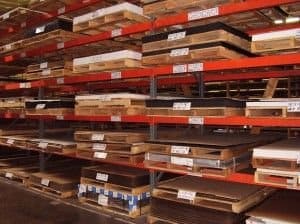
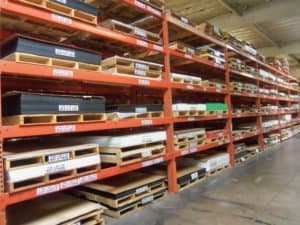
A wide variety of plastics are available in sheet form.
The term: ‘Plastic Sheet‘ or ‘Plastic Sheets’ is more of a general statement covering over a hundred types of plastic materials and plastic products. Some of the most popular plastic materials made as a sheet are:
In addition to the wide range of plastic materials available as plastic sheet, most of these materials are also available as: thin gauge or film, strip, plate, block, slab and plastic panels. The thin gauge or film materials are frequently available with or without a pressure sensitive adhesive also called ‘tape’. Sheet in some materials is available over 4.0″ thick and perhaps as thick as 8.0″ thick in a few materials. The standard sheet size on most of our plastic sheets is either 24″ X 48″ or the larger 48″ X 96″ sheet size; although some materials are available as: 48″ X 120″, 60″ X 96″ or 72″ X 96″. Contact us with with questions on your required piece sizes, we are happy to provide plastic sheets cut to size.
While there are lots and lots of different materials available as plastic sheet, there may only be one or two materials that are right for your application. We want to assist with your search. If you need help choosing the proper plastic material for your application, check out our free Plastic Material Selector Guide. Also, feel free to contact us for further assistance. As a leading plastic sheet distributor since 1975, we feel that we are your best choice as your new plastic sheet and sheets supplier. Give us a call at 866-832-9315.
There are hundreds of plastic manufacturers, and even more plastic sheet, rod and tube suppliers.
What makes one better or worse than another? Some of the biggest differences are in the quality of the materials they have in stock. Not all manufacturers are the same. Some produce very inexpensive materials for the disposable trade. A few supply high quality materials from the big names in the plastic industry.
We buy only from American companies. Our suppliers and warehouses are all here, in the USA. While several of our factories have parent companies in Western Europe, they manufacture the bulk of their materials here in the states. With the NAFTA requirements, we are able to provide certification to all our materials.
American Made Quality Makes A Difference
As you probably know, materials made in areas around the world don’t have the same quality control systems that we have here. We have seen materials from suppliers not in the USA or Western Europe, and have chosen to not carry any of these materials – they just don’t measure up to Made In The USA! We believe that that American Made still means something, and it transfers to the materials we supply.
Since 1975 we have partnered with the best manufacturers, with the best industrial, machinable, mechanical and professional grades of plastic materials available in the marketplace. Quality names like: Westlake Plastics, Ensinger Plastics, Gehr Plastics, Roechling Plastics, Polymer Industries, Spartech Plastics, Z/L Plastics, Plaskolite, and many, many more. None of these are suppliers are newcomers, most of our suppliers have been in business producing excellent quality plastic sheet and rod for over 50 years. We are the new guys, as we started in 1975!
Buy From An Establish Plastics Professional
Industrial Plastic Supply of Anaheim California
How can you tell if your plastics are ‘quality’ pieces of plastic? It is a bit tough to tell by just looking, and that is what the low quality suppliers and manufacturers count on. Sometimes the only way to tell is by cutting or machining a part. We have cut into materials that literally break when a saw blade comes into contact. Some materials have stress levels so high they bow significantly as we cut through the material. See article on Stress In Plastics.
These high internal stresses show up during machining as warping, changes in tolerance, large movement in part size and stress fractures. We have seen parts move by over 5% after part was machined and within 12 hours. This picture shows a piece of glass filled nylon from one of the ‘upstarts’ in the industry. As a test, we were cutting some strips. As you can see, the part has such a high stress level that it warped away from the rest of the sheet as we cut it. This is very dangerous for a person cutting or machining, as it can stop a blade or break free and strike an employee. We chose not to buy from this new company.
Plastic Sheet and rods Proudly American Made
We have been around the block a few times, and we know most of the things that will cause you problems in a material. That is why we only buy from the big guys, the high quality material manufacturers, the well known – tried and true manufacturers. We buy from the experts, the professionals, the leaders in our plastics industry. Supplying industrial grade plastics to machine shops may seem like an easy thing. We treat this process with the respect it deserves; your parts are important to you and your customers. We won’t let you down by providing unacceptable grades of plastic materials. Our parts aren’t stressed out!
Call on us today – 866-832-9315 and ask for a Plasticologist, or email us for more information about the quality materials we supply.
You know how bad it is when you get stressed out, with all the day to day challenges and issues? Well, plastics get stressed too.
The process of producing plastics into sheet, rod and tube is a stressful manufacturing process.
Stress free plastic manufacturing
The process to make a plastic sheet, plastic rod or plastic tube requires the plastic resin to be heated to temperatures of 350° – 500º to get the resin to flow through the machines.
The material is then pushed through a die at high pressure.
This heat and pressure cause many stresses to affect the plastic material.
The cooling of the plastic shape is critical
If the plastic cools to quickly, the surface cools and the center is still very hot, this is a major cause of internal stress.
Processed to quickly and voids or cold spots cause poor quality sections.
Processed to slowly and materials burn in the die and visible burn spots appear on the surfaces – bad material
Proper speed provides homogeneous material that has cooled at a uniform rate through the sheet yields a very low stress sheet
The stresses from this production can be very significant and can ruin your parts. One common prevention method is to anneal or stress relieve the raw material prior to machining, and may require stress relieving during machining if large amounts of material are being removed. The stress relieving process is a slow heat and cool process, contact us for details on your material or project.
Here is an example of a highly stressed plastic sheet, it is 1.250″ thick glass filled nylon sheet. The manufacturer sent us this sample to show the ‘quality’ of their material. We attempted to cut off a strip to do some testing, and you can see the results. This material warped so much it stopped our saw! We never did buy anything from this supplier.
Compression Molded Plastic Sheet and Brownies…
Nylon with huge amount of stress, cooled too quickly.
Yes, you read that right, brownies. I still remember the wonderful smell of my Grandma’s house when she was baking her special 2″ thick brownies. The smell was great, but I also remember the critical timing in the oven. She would open the oven and peek in, and close it quickly so as not to let the heat out. Then, when they looked about right she would open the oven and slip a toothpick into the center of the pan and pull it out again slowly. I can remember asking, “Grandma, why do you put in the toothpick into the brownie?”. The answer was, that the outside cooks quicker than the inside, and it takes a while to get the brownies to cook all the way to the center.Then, when they were all cooked, I would have to wait while they cooled. And, sometimes, if I didn’t wait quite long enough, when I would take a bit the center would burn my tongue. Ouch!
The interesting thing is, that plastics are about the same. Most plastics have a very low co-efficient of thermal conductivity (that is sure a mouth-full), which means that heat and cold don’t travel through the plastics well. This means that it takes a while to ‘cook’ the plastic all the way through, and not just the surfaces. And, just like my brownie story, the plastics take a long time to cool. If the outside of the plastic cools much faster than the inside, then large amounts of stress develop.
The process of compression molding of the plastic sheets is ideal for eliminating stress. The sheets cook slowly, so the entire sheet, including the center, is heated to a uniform temperature. The temperature is held at temperature to insure a fully cooked sheet (you can’t use a toothpick here). Then, over several hours, the temperature of the sheet and the entire compression molding press is lowered very s-l-o-w-l-y. This allows the center of the sheet to cool at the same rate as the external surfaces, and this yields a very stress free sheet. The premier manufacturer of this high quality compression molded sheet is Westlake Plastics. We have been a master supplier of the Westlake Plastic materials for over 35 years.
What should you do to eliminate stress?
If you are experiencing problems with your plastic materials, such as twisting, warping, ‘potato chipping’ or any other sign of stress, contact us. It is probably not your fault. There are dozens of manufacturers that produce engineering and mechanical plastic shapes, they are not all the same. During the production of materials, the process should include a secondary annealing step to remove stress from the newly product. By removing all stress from the sheet or rod you are insured of a ‘clean slat’ before you start machining or finishing. We only provide materials from top rated manufacturers, we truly care about the materials you receive from us.
If you have been experiencing problems with the materials you are getting from other suppliers, let us know, we can help eliminate your stress problems. E-mail us or call us at: 866-832-9315
Polyetherimide or PEI is the generic name for one of the popular engineering resins. The most common resin supplier for this material is Sabic Plastics (formerly known at G.E. Plastics). This amorphous thermoplastic material comes in two common resin varieties used in the production of plastic shapes, the first is Ultem® 1000 which is an unfilled – natural material, the standard color for unfilled PEI (Ultem Sheet) is a transparent amber. The second is Ultem® 2300, which is a 30% glass filled PEI resin, this resin is a creamy tan color. Several other resins are available, including different percentages of glass fill, black pigment or color, and a few high end specialty grades. Some members our our industry refer to Ultem® as the ‘ultimate’ in plastic materials. With some of the best available properties, this material out performs most plastics in critical applications. This material is certified to: FDA compliance, USDA, 3A and also USP Class VI for medical use. Polyetherimides have exceptional tensile and flexural strengths and excellent electrical properties. Ultem® resins have inherent flame resistance and are UL 94 5VA at .075″. Ultem Sheet and rod machines very well, and can be used at temperatures of 340 degrees continuous.
Polyetherimide – PEI is the Ultimate Resin
The Polyetherimide family of plastic resins really excel in the medical and pharmaceutical industries. These industries have incredible demands on plastic materials, and most plastics fail quickly. Ultem resins handle the heat, chemical, stress better than almost any other material. For complete technical data sheets and more information chick for data sheet page. Several of our major manufacturers produce Ultem® PEI resins into stock sheets and rods. Some trade names from these suppliers are: Tempalux®, Sustatec®,Unitem®and many more. Ultem sheet and rod has some of the best properties of all the available plastic materials. Some materials that have some similar properties: Acetal, Radel, PEEK, PTFE. Check the data sheets on each of these materials to help in deciding which material is appropriate for your application.
Rod is normally available in rod from .375″ – 4.0″ diameters, and sheets from .125″ – over 2.0″ thickness, and we stock many items for immediate shipment. Additional sizes are available on request, including larger diameters, thicknesses, molded tube, extruded shapes, strips and bars.
Contact us for more details on this exceptional material. Email us or call us at 866-832-9315
Today’s topic is all about industrial plastic sheet materials in flat sheet or sheets. Also known as plate, slab, strip and bar.
Most plastic materials are processed into sheets or rods. Rods are round, sheet is flat, square or rectangular. These two basic shapes are both generally extruded, although sheet can also be compression molded. Almost all plastic raw materials are available in sheet, and in a huge range of sizes. Most materials are available from .063″ to over 4″ in thickness; and some as thick as 8″ (how to measure thickness accurately, use a 6-Inch Digital Caliper with Extra-Large LCD). Sheet sizes vary, but generally most plastics are produced in 48″ X 96″ sheets or larger, but once again this changes with types of materials and thickness desired. We can help with almost any plastic material.
Need Help Picking a Plastic Sheet Material?
Deciding on the proper material for an application is the first step. Start by reviewing our Plastic Materials Selection Guide to help narrow your search. Having the key properties and needs of your project in mind will help you with this step. Also looking at both the pro’s and con’s of a material will assist in this search. Materials with the greatest property range can be extremely expensive, selecting a material that meets your needs and your budget should be considered.
Step two is researching sizes and availability – this is where we can really help. With most of the major manufacturers as partners, we are able to source your parts from many factories. While the quality from most factories is excellent, the variable is standard and custom sheet sizes. We also stock a wide variety of materials in large sheets. One of our many manufacturers is Westlake Plastics. They have been compression molding large sized sheets of many popular plastic resins; these sheets are available in 48″ X 120″ as a standard sheet size in most plastics. They produce these materials from .250″ – 3.0″ thick or thicker. Other manufacturers produce 24″ X 48″ or 48″ X 96″ sheets as standard. Please contact us for specifics on your material selection.
Mechanical Acetal Sheet
Most of our plastic resins are available as a sheet. This includes some of the most popular plastics, like: Polycarbonate Sheet, Acetal Sheet, PTFE Sheet, Ultem Sheet and dozens more. Sometimes, Plastic sheet is called: Plate, Strip, Bar, Slab, Block or Panel. Please think of these names as being synonyms with Plastic Sheet. Contact us with your special requirements.
In thicker gauges, plastics are frequently referred to as plate, slab or block. And strips or narrow pieces are called bar. A rose by any other name, call it what you will, the plastic starts as a flat sheet from the factory. We can cut them to size or shape. Blanking of sheets to useable sizes is our specialty. Narrow pieces used for long applications are normally called strip. Strip is common in wear type applications.
For a list of materials we have as standard stock materials, check our Plastic Sheets Page. These and many other plastic materials are available, and custom sizes, shapes and colors vary by base material. As a stocking distributor for dozens of major manufactures, we are the West Coasts leading plastic sheet supplier or distributor. If you are in need of some technical assistance go to our Plasticologist page for specific help.
Contact us for more information on plastic sheet materials. Email us or call 866-832-9315