In a previous post, we explored the advantages of Sabic Ultem™, the trademarked name for a special type of high-performance plastic that is often the go-to choice for any industry in need of exceptional physical properties in a thermoplastic. With Ultem™ polyetherimide resins, this type of plastic can retain its mechanical properties even at extremely high temperatures, which is especially important in applications that require good structural integrity under harsh conditions–aerospace and automotive applications for example.
Why is ULTEM™ so popular?
This material is known for its excellent mechanical properties, dimensional stability, as well as chemical and temperature resistance. Because of these properties, Ultem™ has been used widely and with success in many different industries, such as aerospace, automotive, consumer goods, medical equipment, electronics, and industrial equipment. There are, however, a few disadvantages to keep in mind when deciding whether or not to use Ultem™ for your manufacturing project.
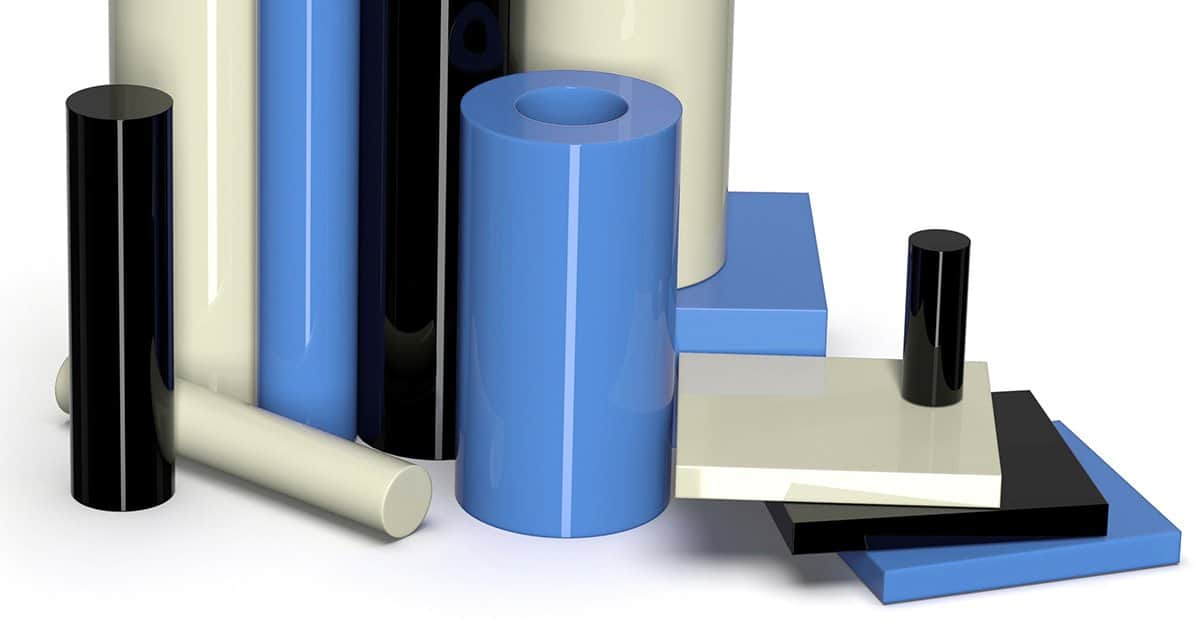
Sabic Ultem 1000 and 2300 sheet and rod
A few disadvantages of using ULTEM™
Also, the polyetherimide thermoplastic can be vulnerable to stress cracking if exposed to polar chlorinated solvents. This can restrict its use in certain applications.
In addition, while Ultem™ is a very high performance thermoplastic, it does tend to be more expensive compared to similar materials and can be difficult to process due to its high melting point and viscosity. For optimal results, you may need to use specialized equipment or work with someone specialized in working with this thermoplastic, which could drive up production costs even more. If the material is not properly controlled during manufacturing, Ultem™ plastic parts can experience surface defects or cracks as well as dimensional instability. If large amounts of material are removed during machining, parts should be annealed after production to prevent warp and twist. Proper quality control needs to be in place to avoid these problems.
Looking for a supplier of high performance thermoplastics?
Industrial Plastic Supply, Inc. has been supplying performance plastic sheet, rod, and tube since 1975, and specializes in wholesale Engineering Plastics, Mechanical Plastics, and High Performance Plastics for a wide range of industries. Check out our website to learn more!
The quick answer is: Performance Plastics are the opposite of single use plastics.
Performance plastic materials are a wide range of materials that are designed for use in mechanical, engineering, aerospace, food processing, and many other applications. These performance plastic materials generally have superior physical properties. Most of these materials are frequently are used to replace other materials like metals, wood and glass.
Most performance plastic sheets and rods are machinable. These special materials can be used to replace other substrates that can not stand up to the same demanding applications. Performance plastics are the natural choice when considering replacement for traditional materials, such as bronze, stainless steel, glass, wood and copper. Performance plastics offer a wide range and combination of features and benefits.
Why Performance Plastics Are So Popular
Because of their cost-effectiveness as well as their reliability, durability, and special characteristics performance plastic materials are replacing metals in the oil and gas industry. The constant development of new and better high performance plastic materials is therefore closely linked to the development and economic production of new materials. High performance plastics can be divided in amorphous and semi-crystalline polymers, just like all polymers.
Performance Plastics properties
Single Use Plastic properties
Long life – up to 50 years of service
Very short, often instant throw away
Wear Resistance
Very cheap
Self Lubricating
Little to no physical properties
High Heat Resistance
Very low melting point
Machinable
Very light weight
Can be Very UV Resistant
Deteriorates quickly
Very Long Life
Extremely short life
Tough and Durable
Considered disposable
Very High Impact Strength
Flimsy, low value
Why use a Performance Plastic?
Performance plastics are designed for repeated or multi-use applications and generate a smaller carbon footprint than glass, steel, or wood. Moreover, high performance plastics are plastics that can perform well under extreme environments. Because most performance plastics are considered ‘self lubricating’, these materials can be made into parts that replace metals. Also, performance plastics don’t require the continual maintenance and lubrication that metals require.
Over the past few decades the Mechanical Plastics have increasingly replaced metals due to their strength-to-weight ratios. Performance plastics have excellent resistance to wear and have surpassed aluminum and steel, respectively. When certain additives are blended with thermoplastic polymers, this performance plastic can meet stringent codes. These Include compliance ratings for smoke, flammability, and even toxic gas release. Similarly, there are several high end performance plastics can meet the stringent FM-4910 flame and smoke rating.
Performance Plastic materials are not ‘cheap’
As opposed to ‘single use’ plastics, the performance plastic materials are not inexpensive or ‘throw away’. Rather these high performance materials are designed for specific applications, and out perform most other substrates. Other characteristics of high performance plastics can be extraordinary resistance to wear and tear. Other considerations include high purity or particular electrical insulation. High performance plastics are plastics that can perform well under extreme conditions. High performance plastics are best known for their temperature, chemical and wear resistance.
Performance Plastics offers high performance plastics for high performance applications. All this and at economical prices, made by quality American made engineering plastics manufacturers. High-performance plastics are formulated to operate under extreme environments. Such as chemical, high temperature and heavy load applications or additionally a combination of these. Most performance plastics are used where the highest demands are placed on these materials. This includes thermal or chemical resistance, product mechanics, or on the self-lubrication of products.
In the performance plastic market, one size does not fit all. With over 40 high performance plastics, each with its own physical properties. Several materials may be upgraded choices for your performance plastic requirement. Please feel free to call one of our certified customer service personnel for assistance in choosing the best performance plastic for your application.
Metals have been around for a very long time, drastically longer than Performance Plastic materials.
The history of Performance Plastic materials is the opposite of the history of metals. Metals are thought to have begun with the use of copper about 11,000 years ago. Gold, silver, iron, lead, and even some brass began to be used before the first known appearance of bronze in the 5th millennium BCE.
Artifacts made of smelted iron have been found dating from about 3000 BC in Egypt and Mesopotamia. In those times, iron was a ceremonial metal; it was far too expensive to be used in everyday life. Metals are commonly very stiff, tough and strong. However, they are also generally quite heavy. Also, the cost to heat metal to production temperatures is extremely high, over 5 times that of Performance Plastic materials. When metals corrode they get smaller, and many can decompose to yield rust.
Performance Plastics
In comparison, plastics only were first made in the early 1900’s. The world’s first known fully synthetic plastic was Bakelite (now days considered Phenolic), and was invented in New York in 1907 by Leo Baekeland who coined the term ‘plastics’. Since this date, thousands of chemists and material scientists have synthesized dozens of plastic base materials. Plastic materials are currently available in over 80 types, and each of these are molded or processed at slightly different temperatures. The wide range of performance plastic materials will allow you to choose the perfect material for your next application.
Some of The Advantages of New Performance Plastic Materials
New Higher Temperature Performance Plastics Material
New Performance Plastic materials like Victrex 450g PEEK and Sabic Ultem 1000 have much higher use temperatures over previous performance plastic materials. The Ultem 1000 unfilled has a continual use temperature above 400 degrees F, while the newer Victrex 450g PEEK materials work well at 480 degrees F on a continuous basis. In addition to the higher temperatures, they are still food grade materials.
Most performance plastic materials can typically be molded in a temperature range of 400 to 600 degree F. While steel starts to melt at 2,500 degrees F. This is five times the temperature, meaning it takes 5 times the energy to convert steel instead of plastic. Lower temperatures equates to lower costs of production.
New Lower Weight Performance Plastics Materials
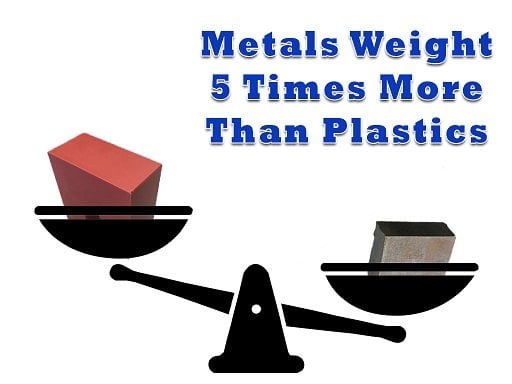
The average plastic weighs just 20% of the average metal product. Many plastics have exceptional weight to strength ratios, meaning that for the weight of the product they are very strong. This low weight means much less raw materials and less impact on the environment if using plastics over metals. This results in lower cost to manufacture parts from plastics over metal.
For instance, new UV grades of HDPE or High Density Polyethylene are very light, with a density of just .96, so light it floats in water. And yet, this new UV grade of HDPE is a workhorse in the plastic market, and is used to replace wood and metals in outdoor furniture.
New Detectable Performance Plastic Materials For Food Contact Approved
Most Performance Plastic materials were engineered to be food contact compliant, and in most cases FDA approved for food contact. With the increase in food recalls, finding the proper materials to ensure that our foods are safe is imperative. Materials like Acetal Copolymer, Acetal Homopolymer, Nylon, Ultem 1000 and Victrex 450g PEEK are all FDA approved for direct food contact.
Which Performance Plastic Will Work The Best
Here are some new performance plastic material grades that include additives to make these materials detectable during food processing. These newly released detectable products include: Tecaform AH UD (copolymer acetal base), Tecapeek UD Blue (PEEK based) and Hydex 4101 UD Blue PBT – Polyester base). Each of these new performance plastic materials comes in Blue color to be detected by color sensors during food processing. The “UD” portion allows these materials to be detected by X-Ray and Metal Detection scanners in food processing production lines. Using these new detectable performance plastic materials in food processing plants can help to eliminate food contamination issues and massive food recalls.
Recent Rising Costs Of Transportation
Changes in transportation rules and regulations since 2018 have made shipping raw materials significantly more expensive. Weight, size restrictions and surcharges for longer packages have more than doubled in the last year.
This has made one of the most expensive components of materials reaching the marketplace is transportation costs, and over the last several years the costs of moving materials across the country has skyrocketed. Metals are heavy, and this weight makes many items very expensive to transport.
Each step in the production of a finished good generally involves shipping to the next step. Raw material converted into base material, then base material converted into usable shape. Later this shape is turned into a component or part. Each time there is a conversion, there normally is shipping to the next processor. Metal weight can limit the amount of metal that can be moved at one time, where plastics can ship up to five times more product per truckload.
With performance plastics, often the conversion in small factories that can be located near final assembly of components limits the amount of shipping of plastic parts. Also, due to the light weight of plastics, trucks can hold up to five times the amount of plastic over metals for shipping. Many plastic parts are made very close to where they will be consumed, cutting logistics fees. This five times the weight also translates to five times higher cost to ship metals. This reduction of transportation costs moves more profit to the bottom line.
New Performance Plastic Materials Eliminate Need For Lubrication
Often, on large metal parts or assemblies, grease ports are added to make lubricating the metal parts easy. Metal on metal parts will wear out very quickly, and therefore require regular service and lubrication.
Newly released performance plastic materials have made lubrication obsolete. One such material is a new compounded Nylon material, called Nylatech PVM has FDA approved oil additives. This new Cast Nylon material runs well for extended periods without external lubrication. This material runs quieter and smoother than previously used metal parts due to a much lower coefficient of friction, and requires no regular maintenance.
Another new grade of Performance Plastic material that is rated as ‘self-lubricating’, and have excellent wear resistance is Lub-X UHMW, which now makes curves in bottling plants move smoother, quieter and require no lubrication. These long wearing and high strength materials outperform most other substrate for low cost, high performance, low weight and self lubrication.
Each of these plastic advantages yield cost savings and long product life. Along with these new areas of advantage, Performance Plastics are 100% recyclable, and can be reprocessed into high strength parts again and again. The plastic recycling industry is still in its infancy, and as it becomes more adept at recycling and reusing valuable plastic materials, our planet and our pocket books will benefit.
When choosing a plastic raw material, the first step should be to look for the material with the proper physical properties. PVC (Polyvinyl-chloride or Rigid Vinyl) is an amazingly strong and versatile material that has proven itself a champion in the ever growing demand for mechanical grades of plastic. We can see its wide versatility in the way it is used and how it can keep up with the rough conditions it’s put under. PVC Pipe has been shown to take a beating in construction sites and it serves its purpose underneath our front lawns for our sprinkling systems. There are many more ways this strong industrial grade PVC can be used.
PVC Sheet and Rod for a wide variety of industrial and mechanical applications
A standard industrial plastics, it is available as PVC Sheet or PVC Rod. The PVC, unlike other materials, is very easy to work with. It’s not necessary to buy expensive tools to get the job done. You can use the most of the same tools you would use on wood and steel. Unlike other materials, PVC can be kept cool easily using cold water or you can use an air compressor. Standard CNC equipment, punch machines, routers, drills and saws can all be used to shape PVC. If you wanted to seal and bond this material, that’s not a problem because like the PVC Pipe, the sheets and rods can be bonded with cements or heat welded. The cost of PVC is also lower than most other plastic materials that are harder to work with. So you can see why PVC should be on your short list of plastic materials.
Standard PVC sheet sizes and thicknesses for PVC Sheet
The standard sheet size for PVC is 48” x 96”. Some of you may know those measurements because that is also the standard size of drywall and plywood. Because PVC comes in the same sizes as other common materials it would be fairly easy to store. As for the thickness .062” – 3” are the most standard thicknesses, but it can be made thicker if needed. The material cuts and fabricates well, and we do offer cutting to your blank or precision sizes. We also cut the rest of the industrial and engineering plastics, including: Acetal/Delrin, Nylon, PEEK, Ultem, and dozens more; call for details.
PVC Sheets take a beating
PVC has many excellent properties, including the unbelievable UL 94 V-0 flame rating. This certification means that the Rigid Vinyl material is fire retardant, and is considered ‘self extinguishing. By now you are probably were thinking “PVC sounds great so far, but I wanted to paint and screen print on a material”, then have no fear because PVC Sheet and Sheeting is here! PVC is also known for its ability to hold paint and a screen print. It is heat bendable, vacuum formable in thinner gauges, and bondable to materials such as wood, paper and other plastics. Because of PVC’s many usages and qualities we even see it being use to create house hold items.
The material can be sanded, routed and you can eliminate scratches and scrapes by simply buffing or sanding them away. With PVC being so versatile and also low in cost, it’s no wonder why it is a top choice for manufacturing and engineering companies. Click here for
Polyetherimide or PEI is the generic name for one of the popular engineering resins. The most common resin supplier for this material is Sabic Plastics (formerly known at G.E. Plastics). This amorphous thermoplastic material comes in two common resin varieties used in the production of plastic shapes, the first is Ultem® 1000 which is an unfilled – natural material, the standard color for unfilled PEI (Ultem Sheet) is a transparent amber. The second is Ultem® 2300, which is a 30% glass filled PEI resin, this resin is a creamy tan color. Several other resins are available, including different percentages of glass fill, black pigment or color, and a few high end specialty grades. Some members our our industry refer to Ultem® as the ‘ultimate’ in plastic materials. With some of the best available properties, this material out performs most plastics in critical applications. This material is certified to: FDA compliance, USDA, 3A and also USP Class VI for medical use. Polyetherimides have exceptional tensile and flexural strengths and excellent electrical properties. Ultem® resins have inherent flame resistance and are UL 94 5VA at .075″. Ultem Sheet and rod machines very well, and can be used at temperatures of 340 degrees continuous.
Polyetherimide – PEI is the Ultimate Resin
The Polyetherimide family of plastic resins really excel in the medical and pharmaceutical industries. These industries have incredible demands on plastic materials, and most plastics fail quickly. Ultem resins handle the heat, chemical, stress better than almost any other material. For complete technical data sheets and more information chick for data sheet page. Several of our major manufacturers produce Ultem® PEI resins into stock sheets and rods. Some trade names from these suppliers are: Tempalux®, Sustatec®,Unitem®and many more. Ultem sheet and rod has some of the best properties of all the available plastic materials. Some materials that have some similar properties: Acetal, Radel, PEEK, PTFE. Check the data sheets on each of these materials to help in deciding which material is appropriate for your application.
Rod is normally available in rod from .375″ – 4.0″ diameters, and sheets from .125″ – over 2.0″ thickness, and we stock many items for immediate shipment. Additional sizes are available on request, including larger diameters, thicknesses, molded tube, extruded shapes, strips and bars.
Contact us for more details on this exceptional material. Email us or call us at 866-832-9315