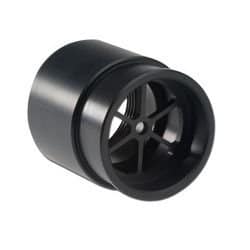
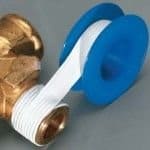
When we think of plastic, we think of plastic bags you get at the grocery store or maybe your child’s toy that’s made out of cheap throw away material. If you stop and think about it, plastic is everywhere and it’s uses are almost infinite. Take Acetal Copolymer, it is a plastic that replaces metal in numerous applications and is used to make gears, screws and other hard working parts. Consider PTFE for instance which is used to coat your frying pan to make it non-stick, make steam valves and fittings, and chemical resistant parts. Another material is Polycarbonate or Lexan® (a SABIC brand name -formerly G.E. Plastics) which is used to replace glass because it is shatter resistant and is also used for bullet resistant glazing and riot shields. Even the cup of coffee you grab for every morning is made of foamed Styrene – Styrofoam. But plastic has shaped our lives in countless ways, many of them you might not even think of or notice.
Plastics play a big part in the world of medicine. Some other advancements in the area of medicine include assisting people with debilitating injuries and serious afflictions, helping them feel more comfortable and move easier. Prosthetic limbs and joint replacements have come along way since the old days of metal and wood. Since the late 90’s UHMW or (Ultra High Molecular Weight Polyethylene) has become the standard in hip and joint replacements. With plastics like UHMW, which has great wear resistance, excellent strength and very low co-efficient of friction (very slippery), it has made people who need these surgeries have better mobility and better quality of life. These plastics also make prosthetic limbs lighter and stronger for athletes who wish to compete and lead near normal active lifestyles due to the use of plastic polymers (derived from the Greek meaning ‘many parts’) mimicking human flexibility. Prosthetic devices date all the way back to the ancient Egyptians where they used leather and wood for toe and foot replacements. But thanks to today’s technologies and advancements in as plastic, most amputees and athletes can regain their quality of life and enabling them to do what they love.
What has Medical Plastic Done For You Lately?
Another plastic material that has changed the medical field is PEEK (Polyetheretherketone). This material is a newer plastic which has high chemical resistance along with excellent high continuous temperature resistance of up to 480 degrees fahrenheit. PEEK has replaced many metal devices in the medical field, because PEEK is one of the only thermoplastics (plastic which can be bent or shaped) able to withstand high doses of radiation over an extended lifetime. In addition PEEK is used to help many people awaiting kidney transplants because it is used to make a critical component in dialysis machines. These machines need to clean the blood over a period of several hours and because of this, PEEK is the natural solution, as it can be steam cleaned time and time again with little effect on the material. Along with its great chemical, temperature, and fluid handling stability, PEEK is USP Class VI, making it ideal for these types of medical applications. The natural color of PEEK is a beige to tan and is available in sheet and rod. One of the largest manufacturers of PEEK resin is Victrex and their 450G resin.
Plastics In Medicine – Everyday
Plastic materials have become apart of our lives and has changed the way we take care of the sick and injured, how we protect our foods from germs, and prolong the storage of foods. Plastics protect medical instruments and insure they are sterile. It has made people’s lives better in both the short and long term. It has helped reduce pain, gain better movement and has given people their confidence back. The values of plastic can not be understated and in the future, hopefully plastics will save or prolong many more lives through advancements in technology and the limitless possibilities it presents.
For more information on these and other medical grade plastics like: Clear Nylon (look for blog post on this), Ultem, Polysulfone, Radel and more, contact us. E-mail us or call 866-832-9315
Most of our clients are surprised that PVC is available in sheet form. They are generally all familiar with PVC Pipe and its uses, but didn’t think they could get the same material in sheet or rod. PVC or Poly-Vinyl-Chloride is a tough and chemical resistant material. We do stock a large variety of PVC grades in both sheet and rod.
PVC sheet is a standard industrial plastic material. The most common color of this material is a dark gray. Although it is also available in white and clear. Other grades of PVC are also available including: materials that meet the FM4910 ratings, forming grades, multiple styles of textured surfaces, high heat, PVC/Acrylic Alloys (AKA Kydex®), CPVC, Aircraft and FAA grades (including Boltaron’s FAR 25.853 ‘a’ and ‘d’ rated materials), ASTM D-1784 certified materials and many more.
PVC sheet – standard Type 1 grade is a tough, machinable, bondable material, that is very chemical resistant and has a UL 94 V-0 rating. This exceptional flame rating combined with excellent bonding and machining make PVC Sheet a perfect plastic ‘building block’ for hundreds of applications.
Many Grades of PVC Sheet Available
The specialty grades are numerous, over 50 different materials, and the world leader in these materials is Boltaron. Since 1954 they have been leading the field of PVC product production and innovation.
PVC Sheet – Type 1 is stocked from .062″ – 3.0″ thick sheet, PVC Rod is also available from .250″ – 9.0″ diameter. White PVC sheet and some Clear PVC sheets are also available from stock.
Standard sheet size is 48″ X 96″, however we cut this material to size, to blanks or parts. Type 1 Gray PVC Rod is stocked in 5 foot and 10 foot lengths, and can be purchased by the foot. Foamed PVC sheet, sometimes called Sintra® or Komatex® is stocked in several thicknesses in white and black. Other colors and grades available with special order.
With the incredible width and breadth of PVC sheet products available, please contact us for data sheets on specific Boltaron® products. Email us or call us, 866-832-9315
Which Performance Plastic Materials are Recyclable?
Over the last 50 years or so since plastic became more and more prevalent, over one billion tons of it has been disposed of and that number only continues to grow. Plastic, because of its molecular structure does take along time to decompose and cannot be burned due to it releasing harmful toxins and pollutants into the air. However since the mid 1990’s, plastic recycling has become more advanced and a greater awareness has been established. Since this time though, new technologies have been implemented making it easier to recycle and making people more conscious to do so. Curbside containers and designated recycling stations have vastly improved the way we dispose of these materials. These programs helped pave the way for a new era where plastics are less likely to be littered on the side of the road and to make it easier to be reused over and over again saving money, energy and helping the environment.
Some of the main plastics which can be recyclable are:
Polyester or PET carries the number 1 symbol. This plastic is primarily used for soft drink bottles. It is the easiest to recycle plastic and can be reground and reused time and time again.
The plastic with the number 2 symbol on it is HDPE which is a plastic primarily used for grocery bags, milk jugs and laundry detergent bottles.
PVC has the number 3 symbol and is used for pipes, fences and non-food containers.
LDPE is number 4 and is used for tubing, caps, rings and shrink wrap (coffee can lids).
Polypropylene has the number 5 symbol and its uses are for automotive parts, food containers and dishware.
Polystyrene is number 6 and is used for food containers and cups (including Styrofoam).
7 is other material such as Acrylic, fiberglass and Polycarbonate. These plastics are used for lenses, glasses and shields.
ABS is the number 9 symbol and is used in automotive, model building and molded parts.
Join the grass roots groups to recycle
Many schools and organizations work to collect and recycle materials, including plastics and aluminum cans. The biggest problem with performance plastic material recycling is that it needs to be so meticulously carried out and requires painstaking time to sort properly and to go through the plastics. This is why the resin identification coding system was implemented in 1988 to help better identify plastics. The number in the middle has no real significance and is just there to help name the plastic the item is made from. This system has greatly improved the way plastics are handled and recycled leading to greater efficiency and better consistency when sorting through plastic resins.
There are, however, some plastics that cannot be recycled. These plastics are called thermosets, which are plastics that cannot return to their original form. The best example of this type of plastic is Phenolic which was the first commercially available plastic back in 1907, and was originally called Bakelite. It is primarily used for electrical and mechanical purposes. Unlike thermoplastics which can be formed and returned to their original shape, thermosets cannot due to their chemical makeup and they frequently have additives or fillers. Thermosets form above the melting temperature so when they are heated, the decomposition temperature is reached before the melt point.
Many of these thermoset materials replace other, much more expensive materials, and generally out last the former material by as much as 20 times. In practice, these material reduce the usage of natural resources and the ‘carbon footprint’ used to produce the items. One such material is the Nylon bushings used in large ships. The Nylon replaces a large Bronze bushing that used to be replaced once a year, and required the ship be put into dry dock to remove and replace the bushing. The new Nylon bushings out perform the bronze, and will last over 12 times longer. Dramatic savings in materials, casting new bronze bushing and the loss of sailing time of these ships.
Performance plastic materials
Thanks to recycling improvements in the last 30 years, recycling has become much more efficient. Because of these programs better care has been taken to insure that plastic is not littered or discarded lightly, and that the programs created are easily accessible so people can take better care of their trash and better care of the earth. Plastics manufacturer commonly work to reuse and recycle materials during production. Many performance plastic materials are available as ‘reprocessed’ or ‘commercial grade’ materials, meaning they contain a percentage of material that has been processed before. The first time a plastic resin is sent through the manufacturing process, that resin is referred to as ‘virgin resin’. Any further processing, the material must be referred to as reprocessed.
Want more information on the recycling of plastics, click here for recycling information. You may also contact us if you have a specific material question at: 866-832-9315, we are happy to assist.
What is the difference between Noryl and PPO (or Modified PPO)?
Noryl® is a trade name for Sabic Plastics (formerly GE Plastics) for their Modified PPO (Modified PolyPhenyleneOxide). Sabic is the world leader in engineering and mechanical plastic resins.
This resin is a remarkably versatile material. PPO exhibits unusually low moisture absorption and great machinability. Noryl® is an excellent choice for water filtration and fluid handling parts. Noryl has excellent impact resistance, long term dimensional stability and is light weight. Noryl® has exceptional electrical properties (properties boosted by lack of water absorption). It can be thermoformed and machined to tight tolerances. It carries a UL flammability rating between UL 94-HB to UL 94 V-1. The primary specification covering PPO (Noryl®) is ASTM-D-4349.
Sabic Noryl is available in two standard unfilled varieties, EN-185 and EN-265. The number indicates the heat deflection temperature of the material. This material is easy to machine, holds tolerances well, and is great for water immersion applications. A complete data sheet is found here.
We stock this material in both sheet and rod. The standard natural color for Noryl is opaque Black and is stocked as the EN-265 grade of resin. Noryl® is also available as a glass filled material which enhances both the mechanical and thermal properties of the resin. Chemical attack from water, most salt solutions, acids and bases is also minimal with Noryl®.
Choosing a PTFE – TFE Sheet Supplier can be difficult, confusing and potentially costly. There are many industries and applications where PTFE – TFE Sheet materials are used, and many providers that want to fill this need. However, it can be difficult to find a supplier that meets all of your business’ PTFE – TFE Sheet needs. To help you choose the supplier that is right for your business, we have compiled this list of 7 things you must know when picking PTFE – TFE Sheet Suppliers.
1. PTFE – TFE is available in many shapes and sizes
Polytetraflouroethylene (PTFE) can be ordered in many different forms, including rods, sheets, blocks, strips, slabs and tubes. As your business grows, you may need access to one or more additional configurations – or perhaps your business is already using multiple configurations. Choose the proper PTFE Sheet Supplier that can meet not only your current needs, but future needs as well. You can view further information about the shapes and sizes as well as and resin properties on our PTFE – TFE information page here.
2. There are a variety of PTFE – TFE Sheet thicknesses to choose from
It is important to have access to multiple sheet thicknesses, and convenient and cost effective to access them all from one Sheet Supplier. That’s why Industrial Plastic Supply offers sheet thicknesses ranging from .005″ to 3.0″, and rod diameters from .125″ to 6.0″. Film is also available. As with in stock availability, your PTFE Sheet Supplier should also be able to meet all of your Sheet thickness needs. Standard sheet sizes are 48” X 48”, and films generally are stocked in 12” wide rolls.
3. Not all PTFE materials are created equal
Some PTFE – TFE Sheet Suppliers order materials from ‘who ever they can get it from’ on an as-needed basis. This brings the question of quality and consistency to mind. There are many manufacturers, including some from China and Russia with questionable quality ratings and machinability. Before committing to a quality PTFE Sheet Supplier, make sure that the supplier is using a reputable manufacturer, and that the quality of material meets your needs. Getting stuck with a poor quality, difficult or impossible to machine block of PTFE can be time consuming and costly.
4. Minimum material order amounts matter
Large Sheet Suppliers and other plastic suppliers often have high minimum order requirements. This makes sense for high volume applications, but for small businesses, or any business in the clutch, it may be necessary to request a smaller total order. Rather than work with multiple PTFE or Plastic Sheet Suppliers based on order size, choose a supplier that can service any order whether large or small. Industrial Plastic Supply has a low minimum material order of $20.
5. Many suppliers do not keep inventory in stock
Just like Grandpa used to say, “You can’t sell from an empty cart”.
Buying your materials from a plastic ‘broker’, means you may have to wait while they try to find the materials to fulfill your requirements. It may also mean that you get the quality of material that they can find quickly. While this may be acceptable for materials that are rarely ordered, your PTFE Sheet Supplier should have your business’ most commonly used materials on hand. This avoids delays and ensures the quickest possible turnaround times on your important orders, and materials from stock means a quality product for your parts.
6. Industry knowledge is critical
You want a Sheet Supplier that not only can deliver your materials, but answer any questions you may have, including the tough ones – whenever they arise. Finding a quality PTFE Sheet Supplier with expert knowledge and great availability will save your business headaches in the long run. Industrial Plastic Supply’s highly trained staff has an average of nineteen and a half years of experience in the plastic industry, and are only a phone call or e-mail away.
7. Choose a supplier with focus
A focus on industrial grade plastic supplies ensures that a supplier is specialized and knowledgeable enough to be your PTFE Sheet Supplier. By focusing on plastics, such a supplier will be dedicated to your mechanical plastic Sheets, Rods, Tube and other shape needs, no matter the application, and no matter how your business changes. Your important orders will be processed timely and efficiently. Since 1975, Industrial Plastic Supply has focused on the mechanical and machinable plastics market, and nothing else. For more information on PTFE Sheets or other plastic materials, contact Industrial Plastic Supply, 866-832-9315. We will work to earn your business.Also, compare PTFE with UHMW or read our post UHMW Sheet versus PTFE Sheets; or read our post How to use PTFE Rod for ideas.
Next time you are cutting vegetables on your cutting board, the material most likely to be used is Polyethylene. Because it is stain, moisture and odor resistant, Polyethylene is a perfect choice. Other cutting boards made out of wood are more susceptible to bacteria and odors because they lack the properties that Polyethylene sheets offer, such as its chemical resistance and FDA approval for food contact. Polyethylene is a very durable and lightweight material that comes in many forms and is a great for a wide variety of applications.
NSF Approved Cutting Boards
The HDPE is available in .500″ thick in several FDA / NSF approved colors, and is great for use in kitchens where cross contamination is a problem.
The Ultimate Cutting Board
Polyethylene has many names. The most common are HDPE, LDPE, and UHMW. The difference has to with the molecular weight and branching which is when a monomer or atom is replaced by a longer chain of polymers (a long repeating chain of atoms). High Density is commonly used for milk jugs and food containers. Low Density is commonly used for bottles and plastic bags. UHMW, which has higher molecular weight (2-6 million) allows for an even transfer over the length of material which makes it stronger and able to be used for bearing applications due to its great wear resistance. Commonly used in the food and dairy industry, UHMW is a great replacement for other materials and solution to many problems. All of these polymers are derived from the same family but all have certain properties that make them a little different. HDPE provides great chemical resistance, with high impact strength and great energy absorption. LDPE has most of the same properties as High Density but is not as dense at 9.15, opposed to HDPE which is 9.34. It also has a lower tensile strength and easier formability.
UHMW is a strong material that has great durability and low co-efficient making it an ideal for sliding applications. Polyethylene offers a wide range of material choices and properties and has great durability that can be suitable for a number of applications. From the food industry to automotive, the kitchen or the warehouse, whatever your Polyethylene needs are; High Density, Low Density or UHMW, Polyethylene is a great choice.
Typical Resin Properties:
General Property
ASTM Test
Typical Value HDPE
Typical Value LDPE
Typical Value UHMW
Specific Gravity
D792
.941 – .965
.91 – .925
.93 – .94
Tensile Strength Yield
D638
3,800 – 5,500
1,400 – 2,000
6,800
Izod Impact – Notched
D256
2.0 – 3.5
>16
No Break
Vicat Softening Temp
D1525
257ºF
219ºF
260
Hardness – Rockwell
D785
D60 -70
D42 – 50
R64
Continuous Use Temp
–
-100 – 180ºF
174ºF
180ºF
Deflection Temp @ 66 psi
D648
171
124
174
Co. Thermal Expansion
D696
7X10⁻⁵
4.6 -5.5X10⁻⁵
11.0X10⁻⁵
Please contact us for more information on FDA and NSF approved plastic materials. Email us here, or call us at: 866-832-9315
Nylon Tube and Tubing can be made from Nylon 6 or 6/6
Nylon is one of the most popular and widely used plastic materials. From the carpet in your home to the yellow Nylon rope you have in your garage, Nylon is a tough and very wear resistant material. This self lubricating mechanical plastic material is very stiff and extremely durable. This material can be machined easily, and is a key industrial plastic resin.
Nylon 6 and Nylon 6/6 Tubing
While Nylon is a common plastic material, in the extrusion and cast grades, it is not a normal stock item for many factories. Nylon can be produced in a huge range of sizes. The cast process enables the range of sizes of a Cast Nylon Tube (Type 6) to be almost unlimited. The extrusion process is a bit more restrictive, which can produce very small sizes to larger sizes of Extruded Nylon Type 6/6 Tubing up to about 2.0″ OD. The properties of these materials are similar, and are listed here. Also, in the case of the Cast Type 6 Nylon Tube, many additives can be mixed into the casting mixture to increase many critical properties. Examples of these additives can yield: Glass Filled Nylon Tube, FDA Approved Oil Filled Cast Nylon Tubing, Cast Nylon MD Tube (molybdenum disulfide), Solid Lubricant Filled Cast Nylon Tube, and a few additional variations. These same filled items are also available in Cast Nylon Rod, Cast Nylon Sheets and Cast Nylon Plates (all made from the same Cast Nylon Type 6 resin). This casting process allows for a wide range of sizes and configurations, from round rod, cast sheet, tubular bar to near net shapes and covers on metal rollers and gears.
Why use Tubular Nylon (Nylon Tubular Bar)
There are numerous reasons to use a Nylon Tubular shaped material.1. Vast range of sizes to fit most requirements2. Large reduction of waste due to near net shape3. Great reduction of machining time due to matching size to finished needs4. Lower cost due to reduced material and reduced machining time
The difference between Nylon 6 Tubing and Nylon 6/6 Tube
The main differences are the base resin. The Nylon 6 tubing is a cast resin, and the Nylon 6/6 tube is an extrusion grade resin. Both materials are still Nylon, just a different grade of resin. The properties are also very similar, look here for specific Nylon resin properties. The other difference is that the Cast Type 6 Nylon is normally in larger sizes. This is because the cast version is poured as a liquid into molds or rigid tooling, and is done one at a time. This process, while it makes a very high quality part, is a more expensive manufacturing method, and is not cost effective in small or thin cross sections.The extrusion grade of Nylon, the Type 6/6 Nylon is heat processed in large batches. This process requires set up and large runs, and is very cost effective in these large production runs. In addition, the cross sections for the heat processed Nylon 6/6 can not be excessively large. The extruded Nylon 6/6 is therefor done sizes up to about 3″, as larger pieces are more expensive and require extra stress relieving to prevent warping.
Cast Nylon Versatility
The Cast Nylon manufacturing in the USA is very advanced. The production facilities can produce amazing and diverse sizes and shapes in the grades listed above. One of the unique versions of Cast Nylon is in the Glass Filled Nylon Tube, Glass Filled Nylon Rod and Glass Filled Nylon Sheet range. The percentage of glass fill can be custom blended to meet your specific needs, and can also contain additional fillers like MD, Oil or pigments. Many grades of Nylon are also available for very specific applications, like: bearings, sheaves, pulleys, wear plates, food processing applications, FDA approved grades, color matched for identification and many more. Other plastic materials used in these same applications include: Acetal Copolymer, PET (Polyester), PTFE and more.Contact us today for additional information on this or any other plastic sheet, rod or tube material. E-mail us here, or call us toll free at 866-832-9315, or visit our main web page at: iPlasticSupply.com
Gehr Plastics has been a major global manufacturer in the plastic sheet and rod industry since 1932. During this period, Gehr has become a leader in a variety of product lines, and also become known for very large sizes in both sheet and rod. Currently Gehr can produce Acetal rod up to 20″ in diameter and sheets up to 8″ thick. Some of the many plastic materials the Gehr produces:
Radel Rod is produced in many medical grade colors
Being innovative also means looking forward. Gehr was selected as the Bioplastics manufacturer of the year in 2008, partly for the new line of plastic materials which have a bio base. These materials have a variety of bio based forms, including: a PLA base, Cellulose based, Polyamide and Wood – Plastic Composite (WPC). One such material is ECOGEHR PLA-L which is a blend of polylactic (polylactic acid), some lignine, fatty acid and wax. This biopolymer is new to our industry and can be used in temperatures ranging from -22 °F to +140 °F.This complete line of materials is one of the only available in the plastic industry to be comprised of many renewable raw materials. Gehr leads the way in this exceptional and innovative product line.
ClearGehr Polyamide Rod
This brand new product is a Clear Polyamide rod. The outside surface is as extruded, and can be polished. This enables the production of a relatively clear sight glass quality material with most of the high end properties of Polyamide – Nylon material. We have supplied this material for small machined parts where neither Polycarbonate nor Acrylic would work well. Because of the natural inherit chemical resistance of Polyamide, this high end ClearGehr rod can out perform all normal transparent plastics. Give us a call to see if this new innovative product will work in your difficult application.
FDA Approved Wear Grade Acetal
Have you been looking for an extended wear Acetal material (like the PTFE filled Acetals – Delrin AF), but need it to be FDA approved? Then perhaps you should consider WearGehr. This proprietary filled Acetal material has excellent wear resistance, and retains the FDA approval of the base Acetal, unlike the PTFE filled Acetal materials which are not FDA approved. It is made in a blue color for easy identification, also it remains very machinable. Contact us for more information on this excellent high tech material.Call us at 866-832-9315 or send us a note here.
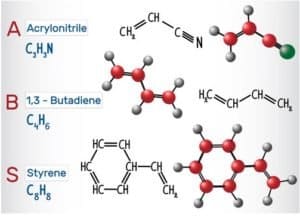
Acetal Copolymer and ABS (Acrylonitrile-Butadiene-Stryene) have some similar properties but are really very different materials. They similarities are: high impact strength, ease of machining with standard cutting tools and good mechanical properties. They are also both FDA compliant and are both good substitutes for brass. They also have great water absorption resistance and good electrical properties. Both materials are good for some of the same applications but certainly not all. Listed below are some of the major differences.
ABS Sheet and Rod Information
ABS comes as Natural (straw) and Black color in Plate, Slab, Sheets and Rods, and thin sheet (.040″ – .250″) it is available as White or Black with a textured surface one side. It can be cut from 48″ X 96″ sheets into strip, panels or pieces.
ABS is formable. ABS is a great thermo-formable material while Acetal is not. Acetal is used more for machined parts such as gears and screws. ABS is great for molding and shaping parts from vacuum to heat forming. Excellent for model building and prototype projects.
ABS is easily bondable (similar to PVC). ABS can be bonded or welded to itself. Because Acetal is self lubricating, it is not possible for anything to stick to it unless etching is done – therefor it is not bondable.
ABS is a great material for painting and silk screening. While Acetal can not be painted or silk screened unless it has undergone Corona Treating (a flame surface treatment), but if treated will nice paint or screened surface.
ABS has better chemical resistance than Acetals. Both are attacked by acids like sulfuric, but ABS has a wider range of resistance to chemicals like aqueous acids, alkaline and alcohol. Acetal will degrade when exposed to such chemicals as chlorine and alkaline.
Specialty grades of ABS are available, including: Glass Filled, Static Dissipating, and Fire Retardant Grades (like Royalite – R59)
ABS Typical Properties Table
General Property
ASTM Test
Value
Specific Gravity
D7921
1.08 – 1.25
Tensile Strength
Yield D638
4,100
Izod Impact – Notched
D256
7.7
Hardness – Rockwell
D785
R105
Deflection Temp @ 264psi
D648
177
Co. Thermal Expansion
D696
5.3X10-54.6 -5.5X10⁻⁵
Acetal Copolymer and Homopolymer Sheet and Rod Information
ABS Resin Structure
Acetal is the better machining plastic, considered the best machining plastic material. Because of its durability and wear resistance, Acetal is an excellent choice for producing a wide variety of parts that require high wear resistance over a wide period of time. When machining to tight and specific tolerances, Acetal is ideal.
Acetal has low co-efficient of friction. Due to its self lubricating properties, it is a great material for sliding and wear applications. This material provides years of maintenance free bushings and bearings.
Acetal sheet is produced from .062″ – over 6″ thick and sheet sizes of up to 48″ X 120″ as standard. The standard color for Acetal and Delrin is Natural (a deep milky white) and Black. Some colors are available as Medical Grade, and can be obtained in limited sizes. These sheet are available cut to: slabs, blocks, plates, slabs and blocks.
Acetal (Polyoxymethylene) can be both a homopolymer and a copolymer. The homopolymer acetal has a repeating chain of one atom while the Acetal copolymer has two atoms forming a repeating chain. Dupont™ Delrin® is a popular acetal homopolymer brand name and the most commonly used acetal homopolymer.
Acetal – Delrin Properties Table
General Property
ASTM Test
Typical Value Unfilled Homo-Polymer
Typical Value Unfilled Co-Polymer
Specific Gravity
D792
1.42
1.40
Tensile Strength Yield
D638
9,600 – 11,000
9,000 – 10,200
Tensile Modulus
D638
450,000
400,000
Izod Impact – Notched
D256
1.2
1.0
Hardness – Rockwell
D785
M94
M90
Deflection Temp @ 264psi
D648
257
220
Deflection Temp @ 66 psi
D648
347
335
Water Absorption @ 24 hrs
%
0.24
0.25
Co. Thermal Expansion
D696
6.83X10⁻⁵
5.4X10⁻⁵
ABS and Acetal Copolymer – Similar, but very different materials
Both of these materials possess excellent qualities and have a wide range of different uses. Acetal is great for machining, while ABS is great for forming and bonding. They both can be used for machined parts and are great choices for food contact and electrical applications. These two materials are both strong and durable plastics, but one might be better than the other for a specific job. When picking the right plastic, it is important to compare plastics and their specific properties to make sure the material won’t fail and that your job will be successful.
Contact us for additional information, call us at 866-832-9315 or contact us here. Consider Industrial Plastic Supply for all your plastic needs, we want to be your go-to plastic supplier.
**Note: Delrin® is a registered Trademark of Dupont
Industrial Plastic Supply, Inc. of Anaheim, California
A frequent question is ‘Where are you located’, and we are happy to share our address. While we service the entire United States, our shipping warehouse is regional.
We are in Anaheim, California, and have been since 1975. Here is our street address:
Industrial Plastic Supply, Inc.
2240 Dupont Dr.
Anaheim, CA 92806
866-832-9315 or 714-978-3520
Our Fax number is: 714-978-2812
Thinking Nationally, Serving SoCal – Locally
Providing local industrial and commercial clients with high quality Performance Plastic materials for over 50 years. We find that having a warehouse full of American Made Performance Plastic materials is a benefit to you, our client. The inventory is here, and we welcome you to come by for a visit. We service the entire USA on a daily basis, however, we still are a local company and can service your local needs today. You requested more stock of the items you need, and we have done our best to have the most popular materials in stock, with more on the way.
When selecting our location, we considered many factors, including: easy freeway access, central location, easy to find, etc. We picked Anaheim because it is in the center of Orange County. We are centrally located between Los Angeles County, Riverside County, San Bernardino and San Diego Counties. We have clients pick up here from Ventura County and even Santa Barbara Counties! We really are easy to find, right across the street from the ‘Big A’ – the Anaheim Stadium where the Los Angeles Angels of Anaheim play ball.
Next time you are traveling in Orange County, we invite you to stop by and see the huge inventory of industrial, mechanical and engineering plastic sheet, plastic rod and tube we have here for you.